The State of Team Alignment 2026: How Teams Really Plan and Deliver Work
We surveyed 419 engineers, PMs, and project managers about sprint planning, agile estimation, and team collaboration. The data shows which teams are shipping consistently, and which are stuck repeating the same mistakes.


Download the full report for free to see exactly where your team ranks amongst your peers and get the 3 frameworks that they us to close the gap between planning and delivery.
Are you confident about the wrong things?
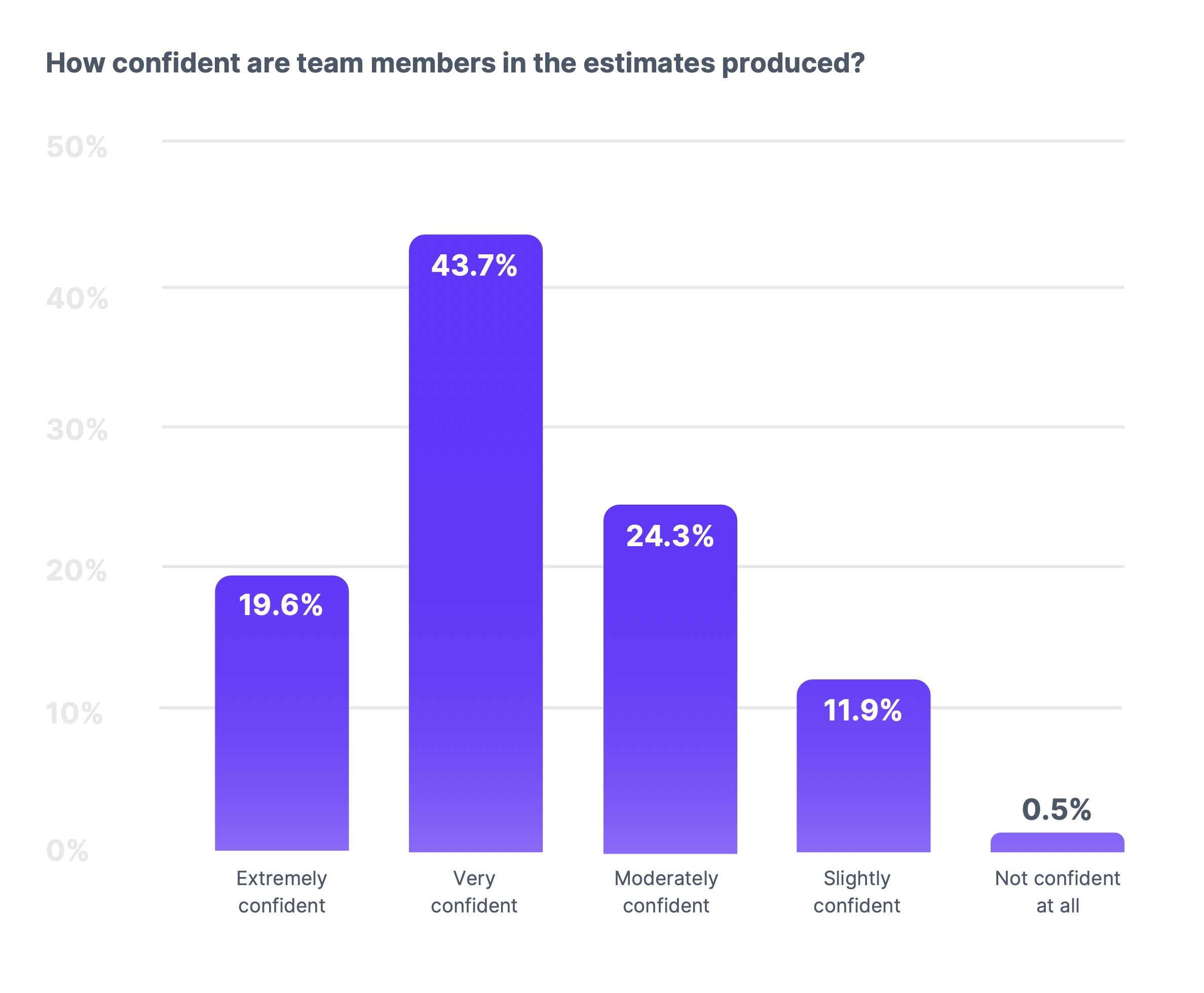
Most teams feel good about their estimates. 63% of teams report feeling confident or very confident in their task estimates. However, 44% miss the mark on half their work or more.
The disconnect isn't random. It comes down to how teams estimate and what they're actually measuring.
What the report reveals
- Which estimation method delivers the highest accuracy (only 31% of teams use it)
- Why time-based estimation creates false precision
- How collaborative approaches catch hidden dependencies before they derail your sprint
- The company-size breakdown - where small teams struggle vs where enterprises fail
Your team might be in the confident majority. But are you also in the group that's consistently wrong? Download the report to find out.
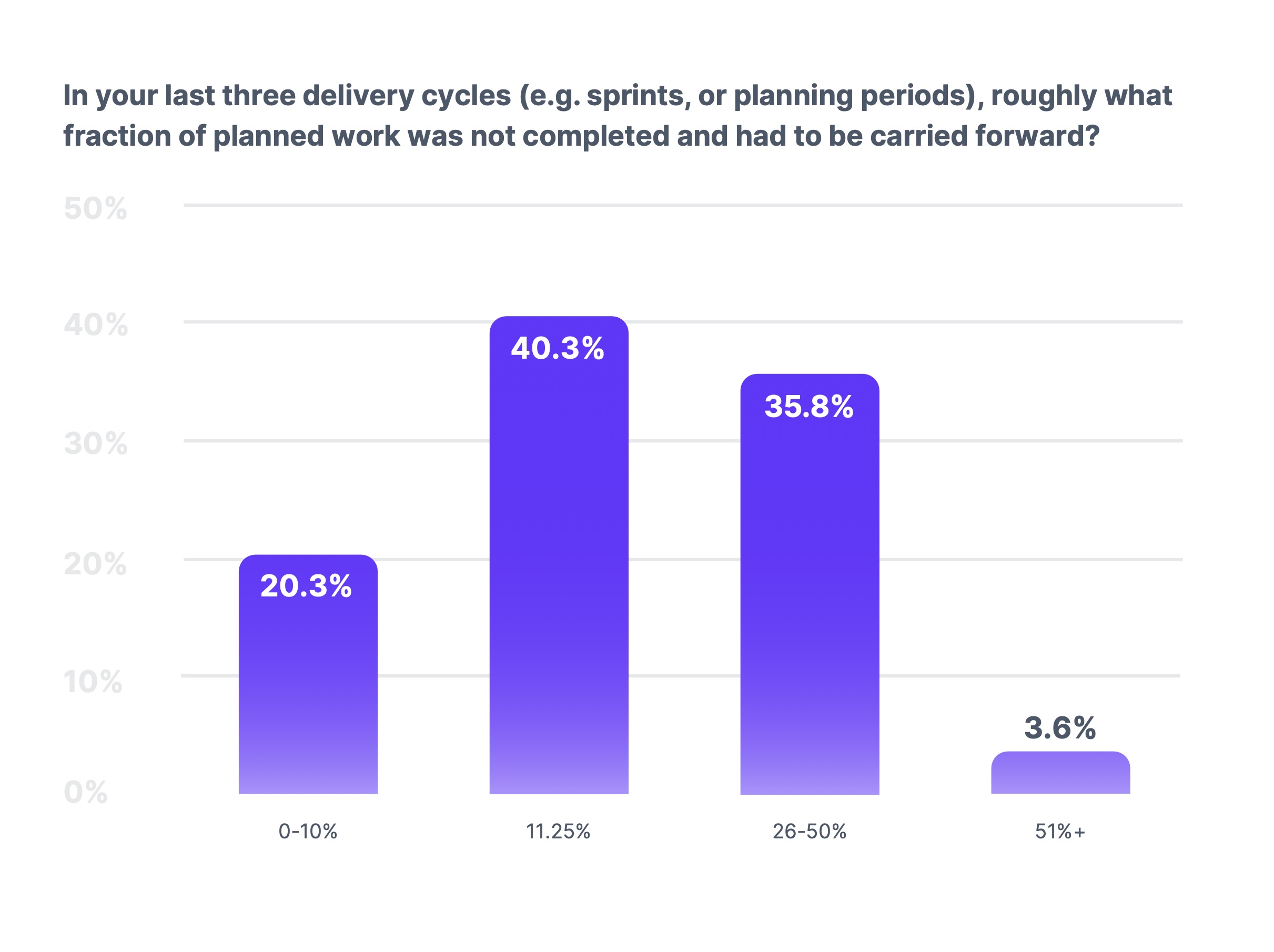
80% of teams roll work between sprints. Are you one of them?
Only 20% of teams maintain minimal rollover (0-10% of planned work). The other 80% regularly move incomplete work forward, with over a third rolling 26-50% of their sprint into the next cycle.
This creates a compounding problem - incomplete work blocks new work, sprint planning becomes a juggling act, and teams lose momentum.
What the report reveals
- The exact rollover patterns by company size (small companies face different blockers than enterprises)
- Why dependencies cause 35.6% of rollover—and how to map them before you commit
- The hidden relationship between tool fragmentation and planning failure
- How the top 20% of teams maintain minimal rollover sprint after sprint
Where do companies of your size struggle most? Get the data in the full report →
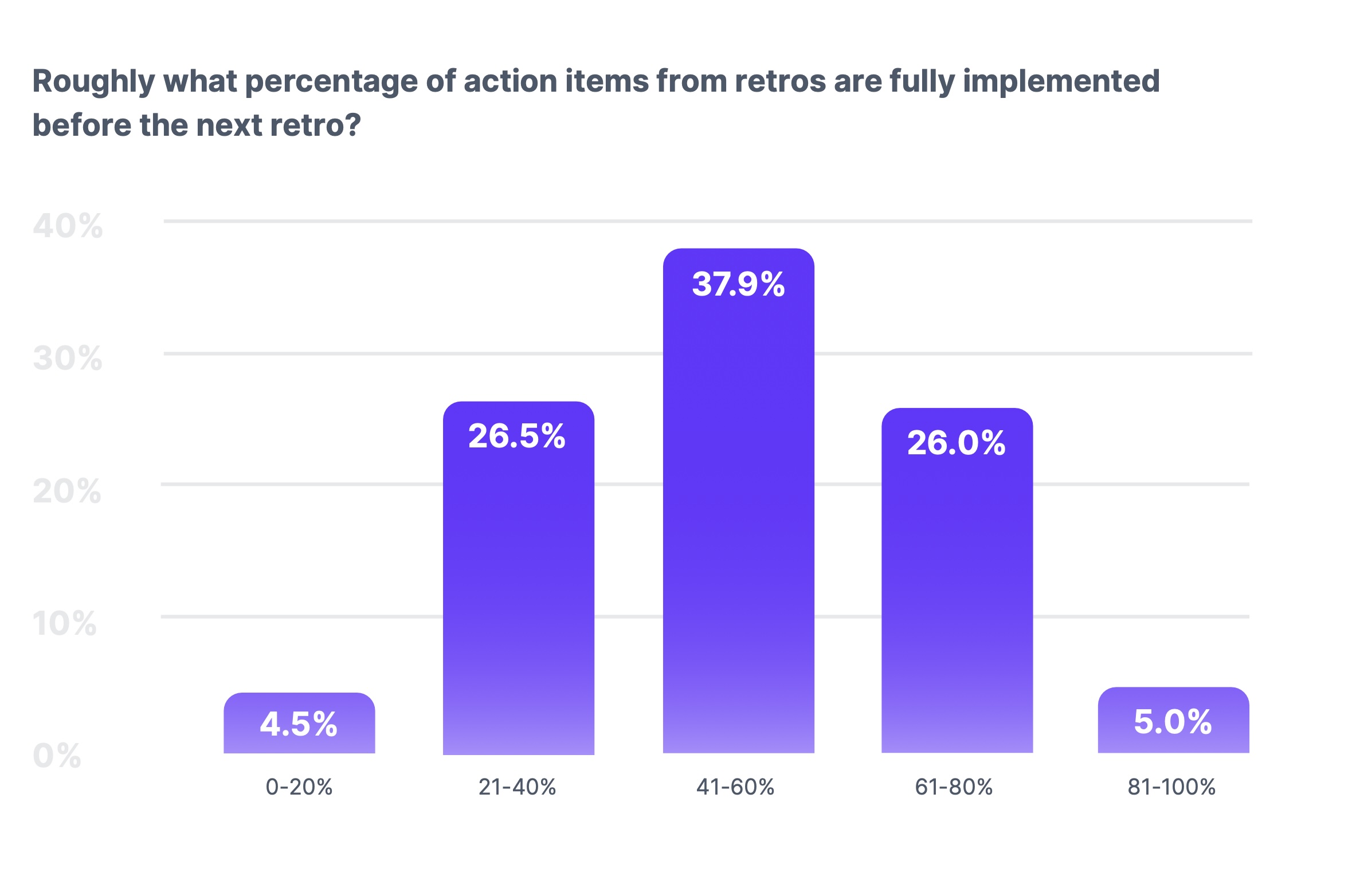
Teams say that retros identify the right problems. But they implement less than 60% of the actions.
61% of teams rate their retrospectives as effective at identifying meaningful improvements. The ceremony works. The identification works.
What doesn't work? Follow-through.
69% of teams implement less than 60% of their retro actions before the next retrospective.
What the report reveals
- The three categories of obstacles (and which one accounts for nearly 30% of failure)
- Why retro actions fail even when teams assign owners
- The critical difference between teams that implement 20% vs 80% of actions
- How to turn retro actions into sprint tickets that actually get done
Which obstacle is stalling your team's improvement? Find out →
Compare your team to 419 peers and get the frameworks that actually work
📊 The benchmarks
- Full response distributions across all questions
- Breakdowns by company size, role, and geography
- Confidence levels vs actual accuracy rates
- Rollover patterns and causes
- Retro implementation success rates
🔧 The frameworks
- Collaborative estimation that catches hidden complexity
- Capacity planning based on your rollover pattern
- Dependency mapping before sprint commitment
- Retro tracking that drives real follow-through
✅ The quick wins
- 3 changes you can implement this sprint
- Specific tactics for your company size
- How to consolidate fragmented workflows
- Making estimation a live alignment tool
Fill the form above to get isntant access to all of this. We respect your privacy. No spam, ever. Unsubscribe anytime.
Submit this form to get instant access to the full 19-page report with frameworks and benchmarks from 419 development teams.
Join the 10,000 product teams already using Easy Agile


Team Alignment FAQs
Frequently asked questions
Everything you need to know about the state of team alignment in 2026